




When the People Pay More Than the State
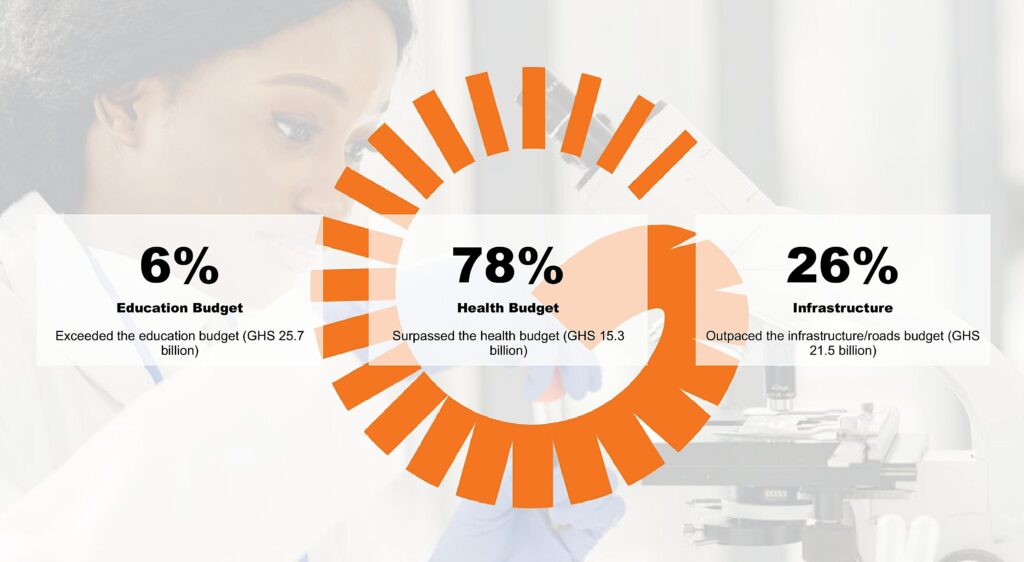
Remittance inflows to Ghana in 2023 reached GHS 27.2 billion (USD $2.43 billion), surpassing government allocations for education, health, and infrastructure. This paper investigates the scale and impact of remittances compared to state spending, analyses the structural differences in fund allocation and distribution, and explores the implications for national development policy. Drawing on national budget data and remittance statistics, the study argues that diaspora contributions should be systematically integrated into macroeconomic planning to harness their developmental potential.

Introduction

Remittances have become a defining feature of many developing economies, serving as lifelines for households and contributors to macroeconomic stability. In Ghana, remittances now represent not just supplementary income but a dominant financial flow rivalling and even surpassing state expenditures in key public sectors. This paper examines how diaspora remittances exceeded Ghana’s 2023 national budgets for education, health, and infrastructure, and considers policy pathways for their integration into formal economic planning.
Methodology
Comparative Analytical Approach
This research uses a comparative analytical approach, drawing on 2023 national budget data from the Ministry of Finance and remittance inflow figures from the World Bank.
Contrast Analysis
The study contrasts remittance volumes with public expenditures across selected flagship programs, analyzes distribution patterns, and explores the functional differences between private and public fund flows.

Results: Remittances Surpassing State Budgets
In 2023, Ghana received GHS 27.2 billion in remittances. This amount:
Structural Differences in Funding Mechanisms
Unlike government funding sourced through taxation and borrowing, remittances are voluntary and privately managed. Key distinctions include:
| Factor | Remittances | Government Budgets |
| Source | Voluntary, private | Taxation and borrowing |
| Distribution | Direct to households | Via ministries and agencies |
| Flexibility | Immediate, needs-based | Subject to budget processes |
| Accountability | Personal | Political/bureaucratic |

Implications: A Parallel Financial Ecosystem

Budget Exclusion
Remittances are not considered in budget projections or fiscal forecasting.
Investment Gap
They are excluded from structured investment programs.
Limited Engagement
There is limited government engagement with the diaspora beyond ceremonial acknowledgement.
The scale and agility of remittance flows position them as a parallel budgetary system. However, their exclusion from national planning reflects a missed opportunity.
Policy Recommendations
Diaspora Bonds
Develop secure investment instruments tied to infrastructure or education for diaspora investors.
Matching Grant Programs
Co-fund diaspora-led development projects (e.g., clinics or schools) with state resources.
Public-Private Partnerships (PPPs)
Include diaspora organizations as formal actors in PPP arrangements for social and economic infrastructure.
To optimize remittance utility for national development, these structured approaches can help formalize and leverage diaspora contributions.
Conclusion

Central Role
Remittances are no longer peripheral to Ghana’s economic structure — they are central.
Outspending Government
Ghanaian emigrants collectively outspend the government on critical public goods.
Sustainable Development
Formalizing diaspora contributions can unlock a more inclusive, resilient, and sustainable development path.
Paradigm Shift
This calls for a fundamental rethinking of economic planning.