



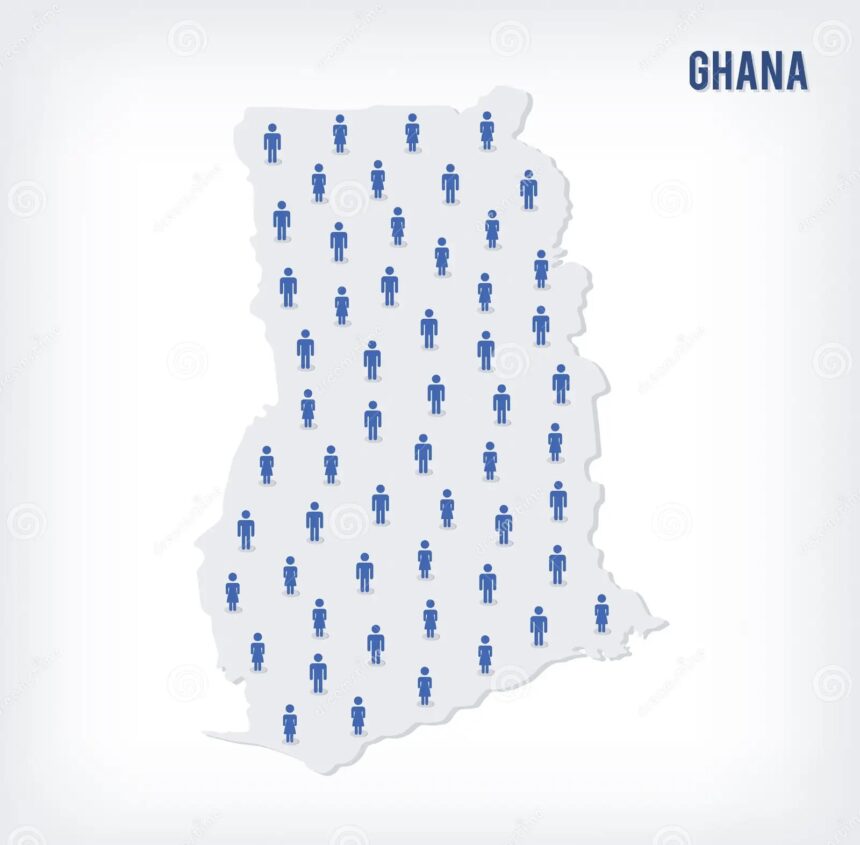

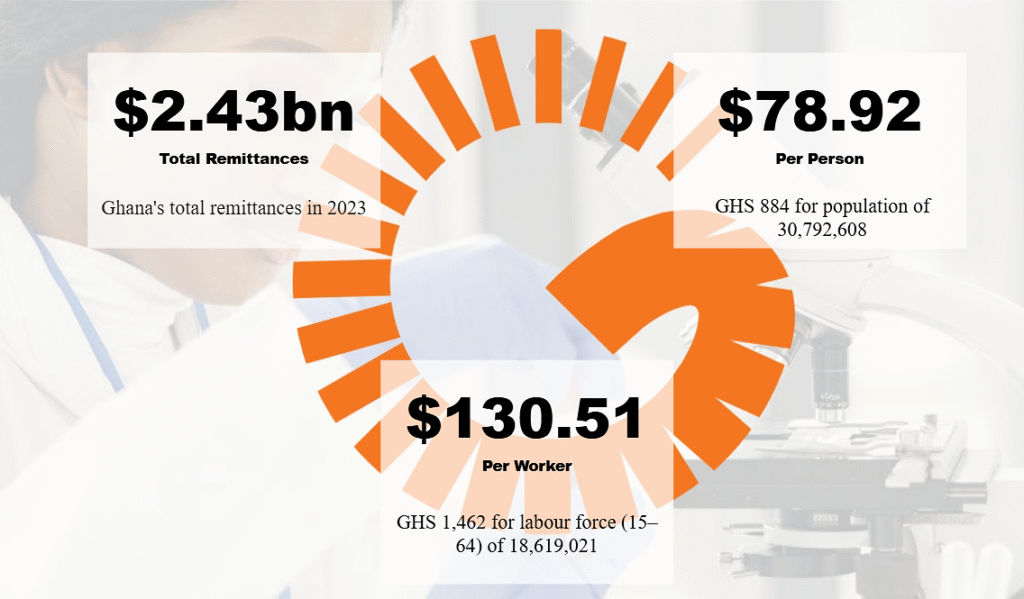
In 2023, Ghana received $2.43 billion in remittances a figure that, if distributed equally, would provide $78.92 (GHS 884) per citizen or $130.51 (GHS 1,462) per worker. While this hypothetical equal distribution illustrates the potential scale of diaspora support, the real impact of remittances is uneven and clustered. This study examines the implications of remittance distribution across population and labour force demographics, evaluates the role of remittances in household income support, and proposes strategies to harness diaspora flows for broader economic equity.
Introduction
Remittances are often viewed as private transfers between family members. However, their cumulative macroeconomic impact in Ghana has grown to rival or exceed national budgetary allocations in key sectors. This paper explores what remittances would look like if treated as a form of public transfer and the insights this exercise provides into inequality, geographic disparity, and the economic multiplier effects of these flows.
The economic significance of remittances extends beyond individual households, creating ripple effects throughout Ghana’s economy and raising important questions about distribution and access.

Methodology

Data Collection
Using official 2023 data from the World Bank and Ghana Statistical Service
Calculation
This study calculates per capita and labour force remittance shares
Analysis
It evaluates geographic and demographic disparities in remittance reception and uses secondary research to analyze the expenditure patterns and multiplier effects of received remittances
Distribution of Population and Workforce
Uneven Realities and Household Impact

Geographic Inequality
Remittances disproportionately flow to urban areas such as Accra and Kumasi.
Household Disparity
Only families with emigrants receive remittances, creating income gaps between recipient and non-recipient households.
Regional Skew
Southern Ghana benefits more than the north, compounding regional economic divides.
While conceptually equal distribution is illustrative, actual remittance flows are selective. Still, in recipient households, remittances provide critical buffers against poverty and contribute to human capital development.
Policy Implications: Remittances as Development Tools
Matched Public Investment
Introduce co-funding for diaspora-supported schools, clinics, or community projects.
Financial Inclusion
Leverage remittance inflows to expand recipients’ access to credit and savings tools
Regional Equity Mechanisms
Provide tax incentives or joint venture frameworks for diaspora investments in underfunded regions

Conclusion

Magnitude of Support
The imagined scenario of equal remittance distribution reveals the significant scale of diaspora support to Ghana’s economy
Current Limitations
The analysis also highlights the limitations of current access to these financial flows
Cumulative Impact
While remittances remain unequally shared, their cumulative impact enhances national welfare and stabilises household livelihoods
Strategic Integration
By embedding remittance flows into equity-focused development strategies, Ghana can better align private generosity with public goals