





This study analyses the substantial economic contribution of Ghanaian emigrants, who individually remit approximately $2,209 annually, totaling $2.43 billion in 2023. By juxtaposing remittance inflows with
domestic labour income, this research highlights the economic significance of diaspora contributions, implications for income distribution, economic resilience, and labour market policies
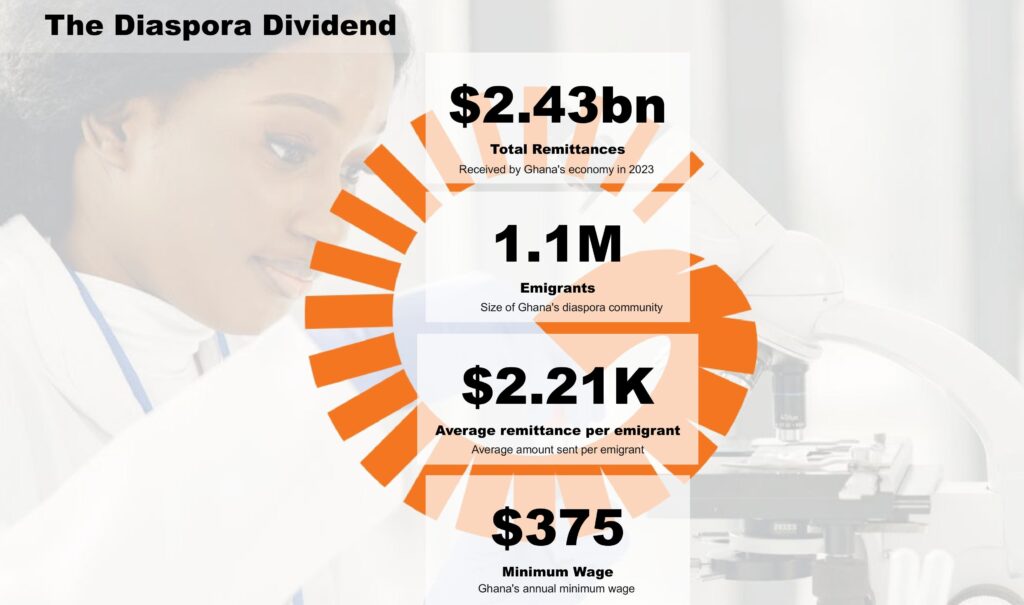
In 2023, Ghana’s economy received an estimated $2.43 billion in remittances from its diaspora community of roughly 1.1 million emigrants. This substantial inflow translates to approximately $2,209 per emigrant annually, significantly surpassing Ghana’s annual minimum wage of around $375. Understanding the scale and impact of these remittances is crucial for formulating effective economic policies and harnessing diaspora resources to promote national development.
Methodology & Comparative Metrics

Data Sources
The research utilizes secondary quantitative data from credible international and national economic sources, assessing total remittance inflows, emigrant population estimates, and Ghana’s labour statistics for 2023.
Analytical Approach
Comparative analysis is conducted to measure remittance contributions against domestic wage structures, consumption patterns, and broader economic metrics.
Income Beyond Borders
Remittance Magnitude
Each emigrant sent an average of $2,209 in 2023, significantly more than the annual earnings of many local workers, especially those earning the minimum wage.
Economic Impact
Remittances predominantly fund immediate consumption needs such as housing, healthcare, education, and small business operations, directly injecting liquidity and stimulating local markets.
Economic Multiplier Effect
These financial inflows facilitate secondary economic activities, supporting local businesses and contributing to broader economic resilience and growth.

Diaspora as Ghana’s Offshore Workforce

Virtual Export
Remittances function as a virtual export commodity
Zero Infrastructure
No domestic infrastructure requirements
No Government Payroll
No burden on government resources
Foreign Exchange
Essential currency comparable to gold and oil exports.
Analysing remittance inflows as analogous to a virtual export commodity reveals their critical economic role. With zero domestic infrastructure or government payroll requirements, emigrants provide essential foreign exchange that parallels significant traditional exports such as gold and oil.
Inequality & Informality
Unequal Distribution
Remittance benefits are predominantly urban-centric and unevenly distributed across households, with pronounced geographic disparities favoring southern Ghana.
Informality in Transfers
Significant remittance volumes escape official tracking due to informal transfer channels, creating data gaps and policy blind spots.
Strategic Policy Opportunities
Diaspora Bonds
Linked to strategic national development objectives.
Digital Financial Services
Expanded services and reduced transaction costs.
Remittance-Matching Schemes
Channeling funds into housing and agricultural sectors.
Effective economic policy interventions could leverage diaspora remittances by establishing remittance matching schemes to channel funds into the housing and agricultural sectors, promoting formalization through reduced transaction costs and expanded digital financial services, and introducing targeted diaspora bonds linked explicitly to strategic national development objectives.
From Personal to Structural
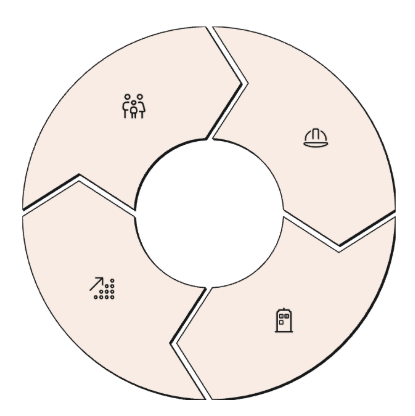
Personal Relationships
Diaspora contributions begin with
family connections
Informal Safety Net
Remittances provide critical economic
stability
Economic Resilience
Securing long-term stability for Ghana
Policy Recognition
Acknowledging emigrants as structural
economic pillars
The Ghanaian diaspora’s financial contributions significantly bolster economic stability and household income, functioning as a critical informal safety net. Recognizing emigrants’ roles beyond personal relationships to structural economic pillars is essential for future policy formulation. Addressing policy gaps, enhancing formal channels, and creating targeted financial instruments can maximize this substantial resource, securing long-term economic resilience for Ghana.