

Most Competitive Constituencies
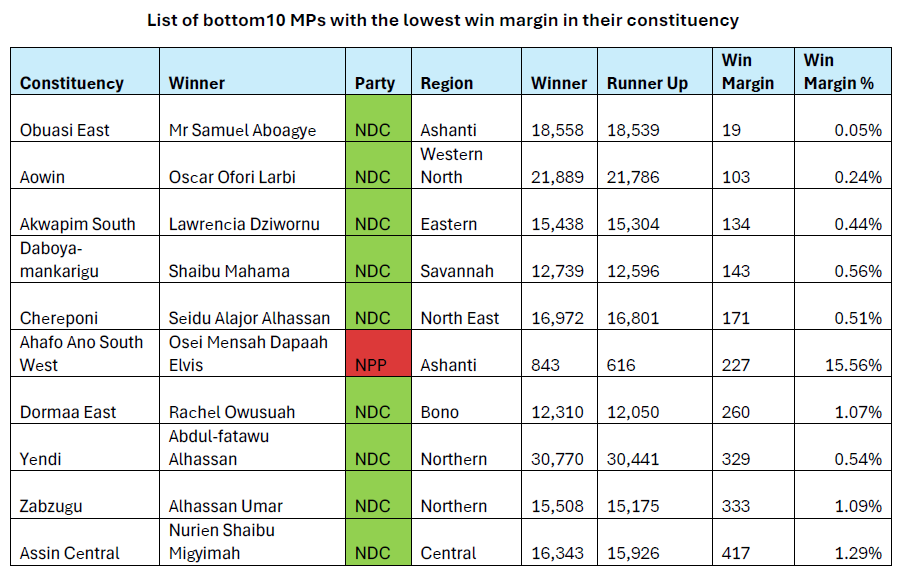
The 2024 parliamentary elections in Ghana also revealed constituencies where competition was intense, with MPs scraping through by the narrowest of margins. These close contests shed light on regions with deeply divided voter loyalties and highlight key battlegrounds for future elections. Here’s a summary of the trends from constituencies with the lowest win margins.
Nail-Biting Finish in Swing Constituencies
Some constituencies witnessed extremely close results, where victory margins were decided by as few as a handful of votes:
- Obuasi East emerged as the closest contest, with Samuel Aboagye (NDC) defeating his opponent by a mere 19 votes—a 0.05% margin. This was particularly surprising given the Ashanti Region’s traditional support for the NPP.
- Aowin saw another tight race, where Oscar Ofori Larbi (NDC) secured victory by only 103 votes (0.24%).
These results underscore the competitive dynamics in swing constituencies, where voter allegiances remain deeply divided.
Highly Contested Regions
Several regions demonstrated intense competition, with razor-thin margins indicating close battles between candidates:
- Eastern Region: In Akwapim South, Lawrencia Dziwornu (NDC) edged out her opponent by just 134 votes (0.44%).
- Northern Region: Constituencies such as Yendi and Zabzugu were hotly contested, with margins of 329 votes (0.54%) and 333 votes (1.09%), respectively.
These results highlight the need for political parties to strengthen their presence and outreach in these areas to gain an advantage in future elections.
Cracks in Strongholds
Even in regions considered party strongholds, such as Ashanti, surprising results emerged:
- In Obuasi East, the NPP’s dominance was challenged as the NDC narrowly clinched victory.
- Similarly, Ahafo Ano South West witnessed a closer-than-expected result, with Osei Mensah Dapaah Elvis (NPP) securing victory with a relatively larger margin of 227 votes (15.56%), making it the safest among the low-margin seats.
Key Takeaways
- Swing Constituencies: Close contests in places like Obuasi East and Aowin indicate the presence of undecided voters and the potential for political shifts in these regions.
- Highly Contested Regions: Constituencies in regions such as Northern and Eastern remain battlegrounds, with results determined by narrow vote differences.
- Stronghold Vulnerabilities: Even traditional strongholds like Ashanti showed cracks in voter loyalty, signaling the importance of addressing emerging voter concerns.
These razor-thin margins not only highlight the competitiveness of Ghana’s political landscape but also emphasize the need for parties to adapt their strategies to secure broader support in these constituencies. Future elections will likely hinge on how well parties engage with voters in these hotly contested regions.