


Key Findings
| 1 | Africa processed $1.43 trillion in mobile money transactions in 2025, 66% of the global total, across 92 billion separate transactions. Ghana alone moved GH¢4.54 trillion through mobile money in 2025, a 50.8% jump from the previous year. In December 2025, Ghana’s mobile money volume in a single month was seven times larger than the country’s entire banking electronic payment rail. |
| 2 | The registration numbers are misleading. Africa has 1.2 billion registered mobile money accounts. Only 347 million were active in any given month in 2025. In Ghana, 83 million accounts are registered. Only 26.7 million were active on a 90-day basis. More than two thirds of accounts across both the continent and Ghana sit dormant. |
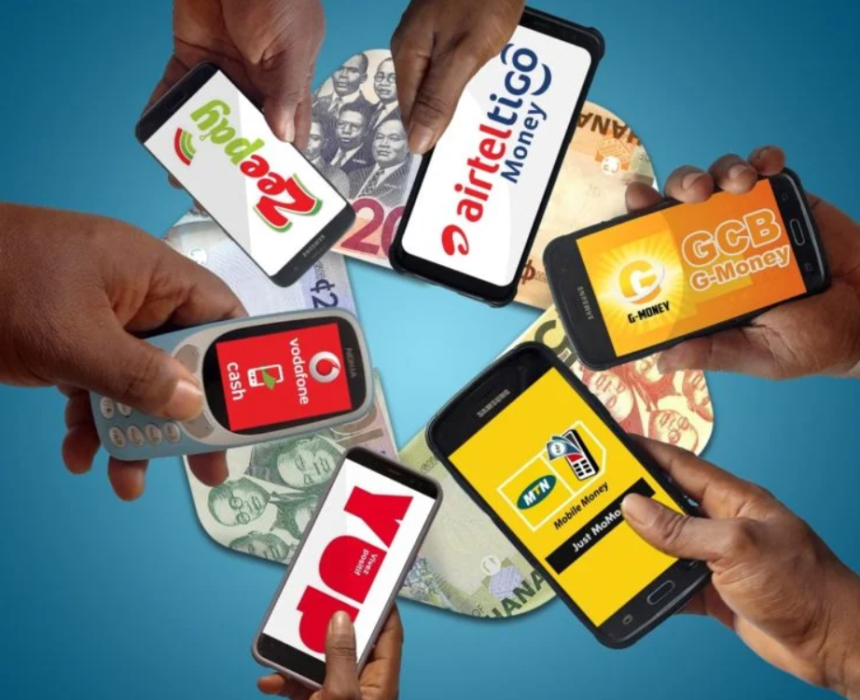
| 3 | MTN MoMo controls 73% of Ghana’s active mobile money market with 19.3 million users and GH¢6 billion in annual revenue. Telecel Cash holds 23%. A new challenger, GhanaPay, backed by 23 commercial banks and operated by GhIPSS, crossed one million active subscribers in June 2025, offering zero-fee peer-to-peer transfers that no telco wallet can match on price. |
| 4 | Ghana’s e-levy was introduced in May 2022 at 1.5%, reduced to 1% in January 2023 after missing revenue targets, and abolished entirely on April 2, 2025. At every rate, it suppressed usage and failed to meet projections. Transaction costs dropped immediately, usage rebounded, and Ghana became the clearest proof yet that taxing mobile money transactions punishes the poor and destroys the infrastructure it is supposed to fund. |
| 5 | The mobile money infrastructure is growing faster than the rules governing it. Fraud, including SIM swap attacks, is an expanding risk the Bank of Ghana has flagged without publishing national loss totals. More critically, only 44% of African providers offered any credit product as of mid-2024. The revolution has built the rails. The products that run on them are still missing for most users. |
Why This Matters
In December 2025, Ghana’s mobile money platforms processed GH¢518.4 billion in a single month. Ghana’s entire banking electronic payment system processed GH¢73.3 billion in the same period. Cheques came in at GH¢37.3 billion. Mobile money is not a supplement to Ghana’s financial system. It is Ghana’s financial system, used by more people, processing more value, and reaching communities that formal banking never reached in 65 years of independence.
The same story repeats across Sub-Saharan Africa. The continent built the world’s most advanced mobile payments infrastructure not by design but by necessity. Banks did not go where the people were. Mobile money did. The result is a GH¢4.54 trillion economy inside an economy in Ghana alone, and a $1.43 trillion continental system that the rest of the world is still trying to replicate. The question now is not whether mobile money works. It is whether governments, regulators and industry can build on it without breaking it.
| GHANA AT A GLANCEGH¢4.54 trillionTotal mobile money value in 2025 (up 50.8% from 2024)26.7 millionActive accounts (90-day) out of 83 million registered (Bank of Ghana, Dec 2025)73%MTN MoMo market share (19.3M active users)GH¢518.4 billionSingle-month record (December 2025, 982M transactions)GH¢73.3 billionGhIPSS Instant Pay (entire banking rail) same month — one-seventh of MoMoE-Levy abolishedApril 2, 2025. Transaction costs dropped; usage reboundedSources: Bank of Ghana; High Street Business (2026); 233Digital (2026); PaymentBrief (2026); Asetenapa (2025) |
Africa Mobile Money: Continental Snapshot 2025
Source: GSMA State of the Industry Report on Mobile Money 2026; Ecofin Agency (2026); Weetracker (2026).
| Metric | Africa 2025 | Global 2025 | Africa Share |
| Registered accounts | 1.2 billion | 2.3 billion | 52% |
| Monthly active accounts | 347 million | ~591 million | ~59% |
| Transaction value | $1.43 trillion | $2.09 trillion | 66% |
| Transaction volume | 92 billion | 125 billion | 74% |
| Active rate (registered) | ~28% | ~26% | Dormancy crisis |
Detailed Analysis
| Finding 1: How Mobile Money Overtook Banking in GhanaMTN Ghana launched mobile money in 2009 when most banks dismissed it as a novelty. By 2025, Ghana’s three operators, MTN MoMo, Telecel Cash and AirtelTigo Money, held 83 million registered accounts and processed GH¢4.54 trillion in annual transaction value, up 50.8% from 2024. In December 2025, 982 million transactions worth GH¢518.4 billion moved through mobile money. In the same month, GhIPSS Instant Pay processed GH¢73.3 billion and cheques GH¢37.3 billion. Mobile money moved more than seven times what the entire banking payment rail did. The Bank of Ghana has confirmed it is now the backbone of Ghana’s retail payments system. Not a fintech story. Infrastructure. (Bank of Ghana; High Street Business, 2026; 233Digital, 2026.) |
| Finding 2: The Dormant Account Problem Is Worse Than It LooksGhana has 83 million registered mobile money accounts and a population of roughly 34 million people. That discrepancy reflects multiple accounts per person, historical inactive accounts and registration campaigns that built numbers without building habits. The meaningful figure is 26.7 million accounts active on a 90-day basis. Across Africa the picture is similar: 1.2 billion registered accounts, 347 million active monthly. More than two thirds sit dormant. The industry’s real challenge is not signing people up. It is turning one-time registrants into regular users of savings, credit and insurance products. (GSMA 2026; High Street Business 2026; PaymentBrief 2026.) |
| Finding 3: Competition Is Heating Up: GhanaPay, Fintechs and the Next PhaseGhana’s mobile money market is no longer a two-horse race. GhanaPay, backed by 23 commercial banks and operated by GhIPSS, crossed one million active subscribers in June 2025, offering zero-fee peer-to-peer transfers that no telco wallet matches on price. Hubtel has 3.2 million active users. Fido has 650,000 loan customers. Zeepay has 1.8 million users focused on diaspora remittances. The Bank of Ghana licenses 23 payment service providers, 8 digital-only banks and 47 mobile loan apps as of March 2026. The competitive pressure is forcing MTN MoMo upmarket. Its advanced services revenue, covering digital payments and lending, surged 55.9% to GH¢2 billion in 2025. (High Street Business 2026; JBKlutse 2026; PaymentBrief 2026.) |
| Finding 4: The E-Levy Lesson and Why Governments Keep Ignoring ItGhana’s e-levy is the most documented mobile money tax failure in Africa. Introduced in May 2022 at 1.5%, reduced to 1% in January 2023 after missing revenue projections badly, and finally abolished on April 2, 2025. Volumes recovered and GH¢4.54 trillion moved through the system in 2025. The lesson: transaction taxes punish the people mobile money is supposed to serve while barely touching high-income users who have alternatives. Other governments are not learning it. Mali raised its mobile operator tax in February 2025 and added a withdrawal levy. Cameroon maintains a 0.2% transaction tax. Kenya proposed 16% VAT on mobile money provider fees in 2026. Each is running an experiment Ghana already ran, and failed. (JBKlutse 2026; GSMA 2026; Mindcron 2026.) |
| Finding 5: Fraud, Regulation and the Unfinished InfrastructureGhana’s mobile money ecosystem is expanding faster than its regulatory framework. The Payment Systems and Services Act 2019 was designed for a simpler ecosystem. Fraud, including SIM swap attacks that allow criminals to take over a victim’s phone number and drain their wallet, remains a growing risk that the Bank of Ghana has flagged in successive oversight reports without publishing specific national loss figures. Structurally, the bigger challenge is depth: only 44% of African mobile money providers offered any credit product as of mid-2024. Savings and insurance uptake through mobile wallets remains thin across the continent. PAPSS, the Pan-African Payment and Settlement System, which lets businesses settle cross-border trades in local currencies without correspondent banks, is the most consequential expansion of mobile money infrastructure currently underway. If AfCFTA is to function as a real common market, PAPSS is the payment layer it needs. (Bank of Ghana 2025; GSMA 2026; MarketDataForecast 2026.) |
Recommendations
1. Bank of Ghana and Ministry of Finance: Do not bring the e-levy back in any form. Ghana tried it at 1.5%, reduced it to 1%, and it still missed targets at every rate while shrinking usage at the bottom of the market. Explore alternative revenue mechanisms from the ecosystem, including licensing fees and a small levy on operator profits, rather than on transactions.
2. Bank of Ghana and Cyber Security Authority: Make SIM swap fraud the top enforcement priority for mobile money security in 2026. GH¢42 million lost in a single year to a known attack vector with known countermeasures is a regulatory failure. Mandate biometric verification for SIM swaps and require operators to publish monthly fraud incident data.
3. Bank of Ghana: Set a public active-account target alongside registered-account targets in all financial inclusion reporting. Measuring success by registered accounts while 57 million accounts sit dormant is measuring the wrong thing. Policy and operator incentives must align around active, habitual use.
4. GhIPSS and NCA: Accelerate PAPSS adoption and interoperability between mobile money operators, GhanaPay and formal banks. A user should be able to send money from MTN MoMo to a GCB account to a Telecel Cash wallet with the same ease and the same fee. The infrastructure exists. The commercial agreements to make it seamless do not.
5. African Union and ECOWAS: Use Ghana’s e-levy abolition as a formal regional case study and circulate the Bank of Ghana’s 2025 transaction data to finance ministries across West Africa. The data needed to stop the next government from repeating this mistake already exists. It needs to be shared.
Methodology Snapshot
This is a Tier 3 Rapid Research publication drawing on the GSMA State of the Industry Report on Mobile Money 2026 as the primary continental data source, alongside Bank of Ghana official payment statistics for Ghana-specific figures. Supporting sources include High Street Business analysis of Ghana’s digital payments market (May 2026); 233Digital on Ghana’s GH¢518 billion December peak (April 2026); PaymentBrief Ghana payments guide (May 2026); Asetenapa Ghana mobile money statistics (September 2025); JBKlutse mobile money Ghana guide (May 2026) and MoMo charges guide (July 2026); Ecofin Agency (March 2026); Weetracker (April 2026); Mindcron (2026); and MarketDataForecast Africa Mobile Money Market report (2026). The analysis covers data from 2009 to September 2026.
Limitations
- Ghana’s 83 million registered account figure significantly exceeds the country’s adult population, reflecting multiple accounts per person and historical inactive accounts. The 26 million 90-day active figure is the more meaningful inclusion metric and is used throughout this brief.
- The GH¢42 million fraud estimate for 2025 is drawn from industry reporting. Official Bank of Ghana fraud data by incident type was not publicly available at time of publication.
- Market share figures for MTN MoMo, Telecel Cash and AirtelTigo Money are drawn from multiple industry sources and may reflect different measurement periods and methodologies.
- The GSMA is the global trade body for mobile network operators. Its annual report reflects industry data from an organisation with a commercial interest in positive mobile money coverage.
- Continental active account data (347 million monthly active) and Ghana active account data (26 million on 90-day basis) use different activity windows and are not directly comparable.
Sources and References
1. GSMA. State of the Industry Report on Mobile Money 2026. March 24, 2026. gsma.com
2. Bank of Ghana. Monthly Payment Systems Report, December 2025. bog.gov.gh
3. High Street Business. The Battle for Ghana’s Digital Payments Market. May 31, 2026. thehighstreetbusiness.com
4. 233Digital. How Ghana Reached GH¢518B in Mobile Money Transactions. April 14, 2026. 233digital.com
5. PaymentBrief. Ghana Payments Guide. May 10, 2026. paymentbrief.com
6. Asetenapa. Mobile Money in Ghana: 50+ Key Statistics and Facts. September 25, 2025. asetenapa.com
7. JBKlutse. Mobile Money Ghana: Complete Guide to MoMo and Fintech 2026. May 13, 2026. jbklutse.com
8. JBKlutse. MoMo Charges in Ghana 2026. July 11, 2026. jbklutse.com
9. Ecofin Agency. Africa Accounts for Two-Thirds of Global Mobile Money Flows in 2025. March 2026. ecofinagency.com
10. Weetracker. Africa Drove Mobile Money to USD 2T. Now Most Accounts Sit Idle. April 2, 2026. weetracker.com
11. Mindcron. Africa’s Mobile Money Hits $1.4 Trillion, Most Accounts Idle. 2026. mindcron.com
12. Ghana Chamber of Telecommunications. Mobile money transactions reach GH¢518B in 2025. February 4, 2026. telecomschamber.org
13. MarketDataForecast. Africa Mobile Money Market Size and Growth Report. 2026. marketdataforecast.com
14. MarkNtel Advisors. Ghana Mobile Money Market Size, Trends and Forecast 2026-2032. marknteladvisors.com
15. World Bank. Global Findex Database 2021. worldbank.org